Ghanem Nuseibeh: The Influential Middle East Analyst Shaping Global Dialogue

Introduction
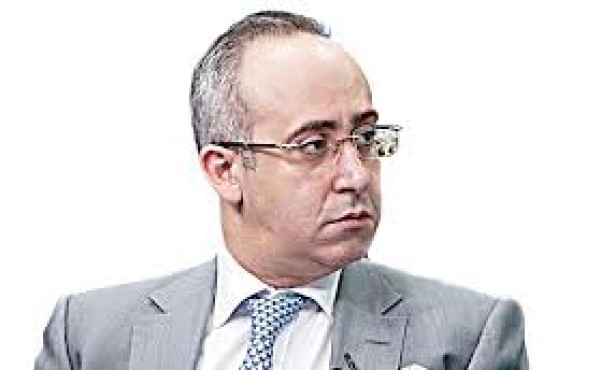
The Middle East remains one of the most complex and politically sensitive regions in the world. Understanding its economic, political, and social dynamics requires deep expertise and balanced perspectives. Among the individuals contributing to global understanding of the region is Ghanem Nuseibeh, a prominent Palestinian-British businessman, political analyst, and advocate of interfaith dialogue.
Known for his strategic insights into Middle Eastern affairs, Nuseibeh has built a reputation as a trusted adviser to governments, multinational corporations, and policy institutions. His work focuses on political risk analysis, economic strategy, and promoting dialogue between communities with historically tense relationships.
This article explores the life, career, and influence of Ghanem Nuseibeh, examining his professional journey, business ventures, academic involvement, and efforts to foster cooperation between different cultures and religions.
Early Life and Family Background
A Historic Jerusalem Heritage
Ghanem Nuseibeh was born on 11 May 1977 in Jerusalem, a city with deep historical and cultural significance. He belongs to the respected Nuseibeh family, one of the oldest Muslim families in the city. For centuries, the family has played an important role in Jerusalem’s social and religious life.
Growing up in such an environment exposed Nuseibeh to the complexities of political and religious relationships in the region. This background would later shape his interest in diplomacy, political analysis, and interfaith engagement.
Multicultural Exposure
Although his roots lie in Jerusalem, Nuseibeh spent significant periods of his life in different parts of the world. Living and working internationally gave him a broader understanding of global politics and economics.
This multicultural exposure helped him develop a balanced perspective on Middle Eastern issues, allowing him to communicate effectively with Western institutions while remaining closely connected to regional realities.
Education and Academic Development
Studying Engineering in London
Ghanem Nuseibeh pursued higher education in the United Kingdom. He studied civil engineering at Imperial College London, one of the world’s leading science and engineering universities.
Engineering education provided him with analytical thinking, problem-solving skills, and a structured approach to complex challenges. These abilities later proved extremely valuable in the fields of political risk analysis and strategic consulting.
Expanding into Policy and Ethics
Beyond engineering, Nuseibeh became increasingly interested in political science, ethics, and international relations. His academic involvement eventually extended to global research institutions.
He has been associated with programmes at King’s College London and the Harvard University Edmond J. Safra Center for Ethics. Through these affiliations, he contributed to discussions on global governance, extremism, and ethical policymaking.
Such academic engagement strengthened his position as a thought leader in matters relating to Middle Eastern politics and international law.
Professional Career and Business Leadership
Founder of Cornerstone Global Associates
One of the most significant milestones in Nuseibeh’s career was the founding of Cornerstone Global Associates, a strategic advisory firm based in London.
The consultancy specialises in:
-
Political risk assessment
-
Economic strategy
-
Market intelligence
-
Government relations
-
Strategic advisory services
Through this firm, Nuseibeh provides expert guidance to multinational corporations, investors, and government agencies seeking to navigate complex political environments.
Advising Governments and Global Businesses
Political instability and economic uncertainty often make investment decisions difficult in many regions. Nuseibeh’s consultancy helps organisations understand these challenges and manage risks effectively.
His advisory work focuses particularly on the Middle East, where geopolitical tensions and rapid economic transformation require careful analysis. By offering strategic insights, he assists clients in making informed decisions about investments, partnerships, and regional engagement.
Expertise in Political Risk Analysis
Political risk analysis involves evaluating how political events or policies could impact economic activity and business operations. Nuseibeh has developed expertise in this field, particularly regarding the Middle East and North Africa.
His analysis covers issues such as:
-
Regional conflicts
-
Government reforms
-
Energy politics
-
Economic diversification
-
Security challenges
By interpreting these factors, he provides strategic recommendations that help organisations minimise risks and identify opportunities.
Media Presence and Public Commentary
A Recognised Voice on Middle Eastern Affairs
Ghanem Nuseibeh is frequently invited to comment on Middle Eastern political developments in international media. His balanced and analytical approach has made him a respected voice among policymakers and journalists.
He provides commentary on topics such as:
-
Middle Eastern diplomacy
-
Counter-extremism strategies
-
Regional economic reforms
-
Interfaith relations
His ability to explain complex geopolitical developments in a clear and accessible way has contributed to his growing international recognition.
Bridging Western and Middle Eastern Perspectives
One of the defining characteristics of Nuseibeh’s commentary is his ability to bridge perspectives between Western and Middle Eastern audiences. His personal and professional experiences in both regions enable him to interpret issues from multiple viewpoints.
This balanced perspective helps foster greater understanding between cultures that often misunderstand each other.
Advocacy for Interfaith Dialogue
Promoting Religious Understanding
In addition to his work in business and politics, Ghanem Nuseibeh is deeply involved in promoting interfaith dialogue. He believes that long-term peace and stability in the Middle East require cooperation between different religious communities.
To support this goal, he has been actively involved in initiatives encouraging communication between Muslims, Jews, and Christians.
Muslims Against Antisemitism
Nuseibeh serves as chairman of Muslims Against Antisemitism, a group dedicated to combating antisemitism and strengthening relations between Muslim and Jewish communities.
The organisation works to challenge prejudice, promote mutual respect, and highlight shared values between faith groups. Under Nuseibeh’s leadership, it has organised educational campaigns and public discussions aimed at reducing religious tensions.
Building a Culture of Coexistence
Nuseibeh’s interfaith efforts reflect his belief that dialogue and understanding are essential for peaceful coexistence. By encouraging cooperation between communities, he aims to address mistrust and historical grievances.
His work demonstrates how individuals can play an important role in promoting tolerance and social harmony.
Research and Academic Contributions
Studying Extremism and Global Ethics
Alongside his professional career, Nuseibeh has contributed to academic research focusing on extremism, political ideology, and ethical governance.
His research interests include:
-
Islamist extremism
-
International law
-
Ethical policy development
-
Religious coexistence
Through his academic work, he seeks to develop frameworks that help governments and institutions respond effectively to ideological conflicts.
Engaging with Global Think Tanks
Nuseibeh has also collaborated with international think tanks and policy institutions. These organisations provide platforms for experts to analyse global challenges and propose solutions.
His contributions to policy discussions help shape debates on Middle Eastern security, economic reform, and diplomatic relations.
Influence on Middle Eastern Policy Discussions
Understanding Regional Transformations
The Middle East has undergone significant political and economic changes in recent decades. From economic diversification to geopolitical realignments, the region is experiencing rapid transformation.
Nuseibeh’s analysis often focuses on these developments and their implications for global markets and international relations.
Supporting Economic Cooperation
Another important aspect of his work involves encouraging economic cooperation between countries. By promoting investment, trade, and technological development, he believes the region can achieve greater stability and prosperity.
Such initiatives help reduce tensions while creating opportunities for growth.
Leadership and Vision
A Global Perspective
Ghanem Nuseibeh’s career reflects a unique combination of business leadership, academic research, and social advocacy. His work demonstrates how expertise in multiple fields can contribute to solving complex global challenges.
By combining analytical thinking with diplomatic engagement, he has positioned himself as a bridge between different cultures, political systems, and religious communities.
Inspiring Future Leaders
For many young professionals interested in international relations, Nuseibeh’s career offers valuable lessons. His journey shows the importance of education, cross-cultural understanding, and ethical leadership.
Aspiring analysts and policymakers can learn from his approach to addressing political and economic challenges with intellectual curiosity and open dialogue.
Conclusion
Ghanem Nuseibeh has established himself as an influential figure in political risk analysis, international consulting, and interfaith advocacy. From his early life in Jerusalem to his professional achievements in London and beyond, his career reflects a commitment to understanding and addressing complex global issues.
Through his work with governments, businesses, academic institutions, and community organisations, he continues to contribute to discussions shaping the future of the Middle East.
By promoting dialogue, ethical leadership, and strategic thinking, Ghanem Nuseibeh demonstrates how informed analysis and constructive engagement can help build bridges between cultures and promote greater stability in an increasingly interconnected world.