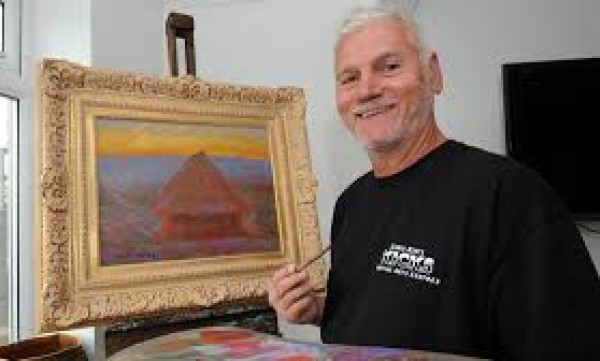

Introduction
The art world has long been fascinated by the thin line between genius and deception. Few figures embody this tension more vividly than David Henty. Known widely as one of the most skilled art forgers of the modern era, David Henty’s story is not simply about forgery, scandal, or controversy. It is about talent, transformation, and the enduring question of what truly gives art its value.
This article explores the life, career, and legacy of David Henty, examining how a man once condemned for imitation has reshaped his reputation and carved out a unique place in contemporary art culture.
Who Is David Henty?
David Henty is a British artist recognised for his exceptional ability to replicate the styles of some of history’s most celebrated painters. Born in the late 1950s in the United Kingdom, Henty displayed a remarkable artistic aptitude from a young age. His natural gift for observation, combined with disciplined technical training, allowed him to reproduce brushstrokes, colour palettes, and compositional structures with astonishing accuracy.
While many artists strive to develop a unique style, Henty’s talent lay in his ability to disappear into the identity of others. This skill would later define both his rise and his fall.
Early Life and Artistic Foundations
A Natural Eye for Detail
From an early age, David Henty demonstrated an unusual sensitivity to visual detail. Unlike casual painters, he studied art analytically, focusing on how masters constructed their work rather than simply what they painted. This forensic approach to art would become the cornerstone of his later career.
Formal Training and Self-Education
Although Henty received traditional art training, much of his learning came from self-directed study. He spent countless hours analysing museum pieces, art books, and reproductions. He paid close attention to ageing processes, pigment behaviour, and historical techniques, allowing him to understand not only how a painting looked when completed, but how it evolved over decades.
The Rise of a Master Forger
Entering the World of Forgery
David Henty’s entry into art forgery was not initially driven by criminal ambition, but by opportunity. The booming global art market, coupled with weak verification processes in certain sales channels, created fertile ground for convincing reproductions. Henty’s skill quickly surpassed that of most copyists, allowing his works to pass as originals when placed in the right context.
Imitating the Great Masters
Henty became particularly known for recreating works in the style of legendary artists such as Caravaggio, Picasso, Modigliani, Van Gogh, and Basquiat. What set him apart was not just technical accuracy, but emotional fidelity. His works captured the rhythm, energy, and intention of the original artists, often fooling experienced collectors and dealers.
Psychology of Deception
At the height of his forgery career, David Henty understood that art fraud was as much psychological as it was technical. Provenance, presentation, and expectation all played critical roles. His paintings often succeeded because buyers wanted them to be real, a powerful insight into human perception and desire.
Exposure and Public Reckoning
Uncovering the Truth
Henty’s activities eventually came under scrutiny, leading to public exposure. Media investigations revealed that several works sold as originals were in fact modern forgeries created by Henty himself. The revelations sent shockwaves through parts of the art market and sparked renewed debate about authentication and trust.
Impact on Reputation
While exposure damaged his standing within traditional art circles, it also brought David Henty widespread notoriety. Unlike many forgers who disappear after being discovered, Henty chose a different path, openly discussing his past and acknowledging his actions.
Reinvention as a Legitimate Artist
From Forger to Copyist
Following his exposure, David Henty reinvented his career. He began selling his works openly as copies or reinterpretations, clearly labelled and marketed as such. This transparency marked a significant shift, allowing collectors to appreciate his skill without deception.
Embracing Authenticity Through Honesty
Ironically, Henty’s post-forgery career is defined by honesty. Buyers now seek his work precisely because of his history, valuing the technical brilliance and the story behind each piece. His paintings are no longer about tricking the viewer, but about demonstrating mastery.
Artistic Technique and Methodology
Materials and Process
Henty’s approach involves meticulous preparation. He studies the materials used by historical artists, including canvas types, pigments, and tools. He recreates painting conditions to ensure stylistic accuracy, often working slowly to replicate natural imperfections.
Understanding the Artist’s Mind
More than technique, David Henty focuses on understanding the mindset of the artist he is emulating. He studies biographies, historical context, and emotional influences, believing that true imitation requires psychological immersion.
Cultural Influence and Public Fascination
Media and Literature
David Henty’s life has inspired fictional portrayals and public discussions about art fraud. His story has appeared in books, interviews, and stage productions, highlighting society’s enduring fascination with forgery and authenticity.
Challenging the Art Establishment
Henty’s career raises uncomfortable questions for the art world. If experts and institutions can be fooled, what truly defines originality? Is it the artist’s hand, the story behind the work, or the signature attached to it?
Ethical Debate Surrounding David Henty
Is Forgery Ever Art?
Critics argue that forgery undermines trust and damages cultural heritage. Supporters counter that Henty’s skill demonstrates extraordinary artistic intelligence and exposes weaknesses in art valuation systems.
Responsibility and Redemption
By openly acknowledging his past and operating transparently, David Henty has positioned himself as an example of accountability. His journey invites broader reflection on redemption, talent, and second chances.
Legacy and Modern Relevance
A Mirror to the Art Market
David Henty’s story serves as a mirror to the modern art market, revealing how branding, reputation, and narrative can outweigh pure artistic merit. His work forces collectors and institutions to reassess how value is assigned.
Influence on Future Generations
Aspiring artists and art historians study Henty not to learn deception, but to understand technique at its highest level. His ability to dissect and replicate style remains a valuable educational reference.
Conclusion
David Henty is more than an art forger turned legitimate painter. He is a symbol of the complex relationship between creativity, authenticity, and value. His journey from deception to distinction challenges conventional definitions of originality and forces the art world to confront its own vulnerabilities.
In an era where perception often defines reality, David Henty’s life story stands as a compelling reminder that true mastery cannot be erased, only recontextualised. Whether admired, criticised, or debated, his name remains firmly embedded in the modern history of art.