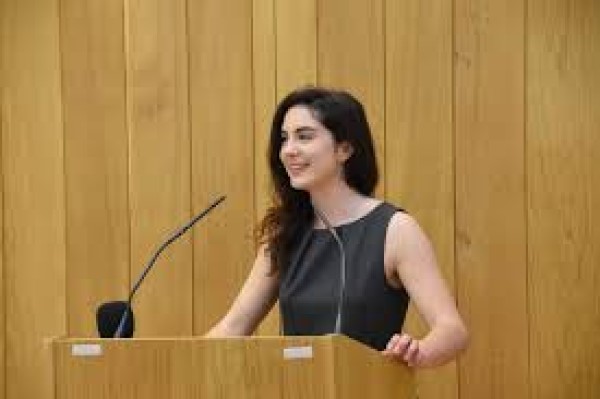
Dr Lola Salem: Scholar, Cultural Critic and Voice in Modern Intellectual Debate

Dr Lola Salem is a distinguished academic, cultural commentator and former professional singer whose work bridges the worlds of scholarship, performance and public debate. With a foundation rooted in rigorous intellectual training and a career that spans musicology, arts criticism and consultancy, she represents a modern scholar deeply engaged with both history and contemporary society.
This article explores her academic achievements, research interests, professional background and the broader impact she has had in cultural and intellectual circles.
Table of Contents
ToggleAcademic Foundations and Education
A Doctorate from the University of Oxford
Dr Lola Salem earned her doctorate in musicology from the prestigious University of Oxford, one of the world’s leading centres for academic excellence. Her doctoral research focused on areas within early modern music, particularly seventeenth-century French opera.
A DPhil from Oxford is widely recognised as one of the most demanding academic qualifications in the United Kingdom. It requires not only subject mastery but also the ability to contribute original research to a field. Dr Salem’s academic formation at Oxford placed her within a tradition of deep historical inquiry, critical analysis and intellectual independence.
Interdisciplinary Strength
While her specialism lies in musicology, her work reflects a broader interdisciplinary outlook. Musicology is not merely the study of music as sound; it encompasses history, literature, politics, philosophy and cultural theory. Dr Salem’s academic profile demonstrates engagement with these overlapping disciplines, particularly in understanding how art reflects and shapes social and economic structures.
Her research often connects artistic production with wider cultural currents, examining how opera and performance were embedded in political and social life.
Research Interests and Scholarly Focus
Seventeenth-Century French Opera
One of Dr Salem’s principal research interests is seventeenth-century French opera. This was a transformative period in European cultural history, marked by the consolidation of royal power in France and the flourishing of court-sponsored artistic production.
Opera during this era was not merely entertainment. It functioned as a tool of cultural expression and political symbolism. By analysing libretti, musical structure and staging practices, Dr Salem’s work sheds light on how art interacted with authority, identity and ideology.
Cultural Policy and the Arts
Beyond historical study, Dr Salem has shown interest in contemporary cultural policy. Cultural policy addresses questions such as:
-
Who funds the arts?
-
How should artistic institutions be governed?
-
What role should culture play in public life?
-
How does economic policy influence creative production?
Her ability to connect historical scholarship with modern debates gives her commentary depth and relevance. Rather than viewing art in isolation, she examines it as part of a broader societal framework.
Performance Practice and Interpretation
As someone trained as a professional singer, Dr Salem brings practical insight into performance practice. Performance practice explores how music was originally intended to be performed and how modern interpretations should approach historical works.
This dual perspective – both academic and performative – enhances her authority in discussions about authenticity, interpretation and artistic meaning.
Professional Experience Beyond Academia
Training as a Professional Singer
Before or alongside her academic career, Dr Lola Salem trained as a professional singer. This practical experience is significant. Many scholars of music approach their subject purely from textual or archival research, but Dr Salem understands music as a lived, embodied experience.
Her performance background allows her to speak with credibility about:
-
Vocal technique
-
Historical stylistic conventions
-
Audience engagement
-
The relationship between performer and composer
This fusion of theory and practice distinguishes her profile within the field of musicology.
Arts Criticism and Commentary
Dr Salem has also worked as an arts critic. Arts criticism requires clarity of expression, critical judgement and accessibility. Writing for broader audiences demands a different skill set from academic writing.
As a critic, she engages with contemporary cultural production, assessing quality, originality and social relevance. This role situates her within ongoing public conversations about the value and direction of the arts.
Public Engagement and Intellectual Debate
Participation in Cultural Forums
Dr Lola Salem has taken part in public intellectual forums, including discussions at events such as the Battle of Ideas festival. This annual event in the UK is known for lively debate on politics, culture, science and society.
Participation in such forums signals a commitment to engaging beyond academic institutions. It reflects an interest in open debate and the exchange of ideas in public settings.
Engagement with Political and Cultural Figures
Dr Salem has occasionally been referenced in media coverage in connection with public appearances involving figures such as Michael Gove. While such associations have drawn media attention, they do not define her professional identity.
It is important to distinguish between media narratives and academic achievement. Dr Salem’s primary credentials rest upon her scholarship, teaching and cultural analysis.
Teaching and Mentorship
Academic Teaching
As a scholar trained at Oxford, Dr Salem has contributed to teaching in higher education. Academic teaching involves more than delivering lectures; it requires mentoring students, guiding research and fostering independent thought.
Her expertise in French opera and early modern cultural history would have provided students with insight into:
-
Historical methodologies
-
Archival research techniques
-
Analytical frameworks for interpreting art
-
The relationship between culture and power
Teaching also strengthens scholarship. Explaining complex ideas to students sharpens clarity and deepens understanding.
Encouraging Critical Thinking
In an era of rapid information exchange and cultural polarisation, the ability to think critically is vital. Academics like Dr Salem contribute to cultivating analytical skills, encouraging students to question assumptions and examine evidence carefully.
The Significance of Her Work in Contemporary Britain
Arts and Identity
Britain’s cultural landscape continues to evolve amid debates about national identity, heritage and public funding for the arts. Scholars who understand both historical context and contemporary challenges play an important role in shaping informed discussion.
Dr Lola Salem’s background in cultural history enables her to situate present-day concerns within longer historical trajectories. Understanding how the arts functioned in previous centuries helps illuminate current debates about accessibility, elitism and public support.
Intellectual Independence
Public intellectual life in the UK often involves strong disagreement. Engaging in debate requires intellectual resilience and clarity of argument. Dr Salem’s participation in public forums suggests a willingness to articulate and defend her views within challenging environments.
Such engagement contributes to a healthier democratic culture, where ideas can be examined rather than suppressed.
Personal Qualities and Professional Identity
A Blend of Scholarship and Artistry
Few individuals combine high-level academic research with professional artistic training. Dr Lola Salem’s career reflects a rare synthesis of rigorous scholarship and practical performance experience.
This blend enriches her analysis. When discussing opera, for instance, she understands both the theoretical framework and the physical demands of singing. That perspective adds nuance to her work.
Adaptability Across Roles
Her career demonstrates adaptability:
-
Academic researcher
-
Lecturer
-
Arts critic
-
Cultural commentator
-
Public speaker
Such versatility is increasingly valuable in the modern professional landscape, where rigid career paths are less common than in previous generations.
Why Dr Lola Salem Draws Public Interest
Interest in Dr Lola Salem often stems from a combination of factors:
-
Her academic achievements at a leading British university.
-
Her expertise in a specialised and culturally rich field.
-
Her engagement in public debate.
-
Media attention linked to public appearances.
However, it is her intellectual contribution that forms the core of her professional identity. Academic excellence and cultural analysis remain central to her profile.
The Broader Context of Musicology Today
Musicology in the 21st Century
Musicology has evolved significantly in recent decades. No longer confined to the study of composers and scores, it now includes:
-
Gender studies
-
Postcolonial analysis
-
Economic history of the arts
-
Performance theory
-
Digital humanities
Dr Salem’s work sits within this evolving discipline, reflecting a willingness to connect historical research with contemporary frameworks.
Preserving Cultural Heritage
Scholars of early opera help preserve cultural heritage. By researching and interpreting seventeenth-century works, academics ensure that important artistic traditions remain accessible and meaningful.
Through teaching and public discussion, Dr Salem contributes to keeping this heritage alive for new audiences.
Conclusion
Dr Lola Salem stands as a multifaceted figure in contemporary British intellectual life. With a doctorate from the University of Oxford, specialised research in seventeenth-century French opera, professional training as a singer and active engagement in public debate, she embodies the integration of scholarship and cultural participation.
Her work highlights the enduring relevance of the arts in understanding society. By examining the historical foundations of opera and connecting them to modern policy and cultural discussions, she demonstrates how the past continues to shape the present.
In a time when the role of the arts is frequently questioned, voices like Dr Lola Salem’s remind us that cultural scholarship is not merely academic abstraction. It is a vital means of interpreting history, critiquing contemporary systems and enriching public life.