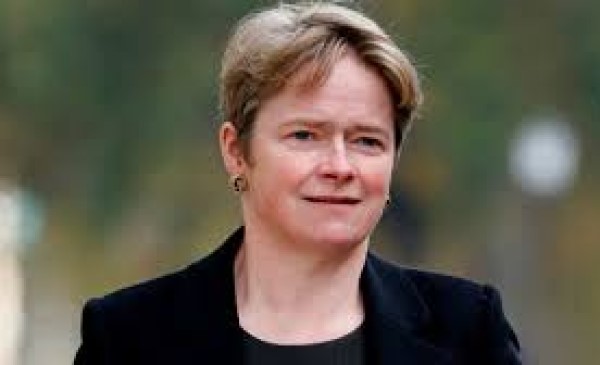
Dido Harding: The Trailblazing Leader Shaping British Business and Public Health

Introduction
Dido Harding is a name that resonates across British business and public life. Known formally as Diana Mary Harding, Baroness Harding of Winscombe, she has carved a remarkable path from high-profile corporate roles to pivotal positions in public health management. With a reputation for strategic leadership and resilience in challenging situations, Harding has become a figure of influence, debate, and inspiration. Her story embodies the intersection of business acumen, public service, and personal passion, making her one of the most significant British figures of the 21st century.
In this article, we delve into her early life, business career, public health contributions, controversies, and personal interests, providing a comprehensive portrait of Dido Harding.
Early Life and Education
Dido Harding was born in November 1967 into a family with a distinguished military and public service background. Her father, John Harding, 2nd Baron Harding of Petherton, and her grandfather, Field Marshal John Harding, imbued a sense of duty and leadership from an early age. Growing up in Dorset, she experienced a privileged education and developed a keen interest in both academics and leadership.
Harding attended some of the UK’s most prestigious schools before pursuing a degree in Philosophy, Politics, and Economics (PPE) at Magdalen College, Oxford. Her time at Oxford coincided with contemporaries who would later become prominent political leaders, including former Prime Minister David Cameron. Later, she enhanced her global perspective by earning an MBA from Harvard Business School, equipping her with the skills to navigate complex corporate environments.
Corporate Career: Leadership and Challenges
Early Roles in Consulting and Retail
Harding began her professional journey as a consultant at McKinsey & Company, a role that honed her analytical thinking and strategic planning abilities. She then transitioned into leadership positions in retail and travel industries, including significant roles at Thomas Cook, Woolworths, Tesco, and Sainsbury’s. Her early career demonstrated an ability to manage large organisations, drive growth, and implement operational efficiencies.
Chief Executive of TalkTalk
Perhaps the most high-profile chapter of Harding’s corporate career was her tenure as Chief Executive of TalkTalk Group, one of the UK’s leading telecommunications companies, from 2010 to 2017. Under her leadership, TalkTalk navigated both market expansion and significant challenges, including one of the UK’s most notorious cyber-attacks in 2015, which affected millions of customers.
Despite the intense scrutiny and criticism that followed the breach, Harding’s strategic decisions ensured the company’s survival and continued growth. Her handling of this crisis highlighted her resilience and commitment to corporate responsibility, even under extraordinary pressure.
Transition to Public Service
Chair of NHS Improvement
In 2017, Harding shifted her focus from private sector leadership to public service, accepting the role of Chair of NHS Improvement. This position tasked her with overseeing the performance of NHS trusts in England, implementing reforms, and ensuring accountability across the healthcare system. Her appointment reflected a growing trend in the UK to leverage private sector leadership expertise in public institutions.
Leading NHS Test and Trace
During the COVID-19 pandemic, Harding’s leadership came under the national spotlight when she was appointed to head the NHS Test and Trace programme. The initiative aimed to control the spread of the virus through testing, tracing contacts, and advising isolation measures.
While the programme faced criticism for initial inefficiencies and cost overruns, Harding’s role underscored the complexity of managing public health initiatives at a national level. It also highlighted the tensions that can arise when business leadership techniques are applied to public health challenges, sparking nationwide debate about the future of health governance in the UK.
Interim Chief Executive of UK Health Security Agency
Following her work with NHS Test and Trace, Harding served as the Interim Chief Executive of the UK Health Security Agency, formerly the National Institute for Health Protection. In this capacity, she was responsible for strengthening health security, preparing for future pandemics, and advising government strategy. Her tenure, though temporary, further cemented her reputation as a leader capable of navigating high-stakes environments.
Controversies and Criticisms
No public figure rises to prominence without facing scrutiny, and Dido Harding has been no exception. Her tenure at TalkTalk and NHS Test and Trace attracted criticism on several fronts:
-
TalkTalk Cybersecurity Breach: The 2015 cyber-attack exposed personal data of millions, leading to questions about the company’s security measures and Harding’s accountability.
-
Test and Trace Programme: Critics argued that the programme’s early inefficiencies and high costs were a reflection of Harding’s lack of public health expertise.
Despite these challenges, supporters point out her ability to lead large organisations, make decisive decisions, and implement complex programmes under pressure. The controversies highlight the challenges faced by leaders bridging the private and public sectors.
Personal Life and Interests
Beyond business and public service, Harding is known for her personal interests, particularly in horse racing. She has a long-standing involvement with the sport, including ownership of Cool Dawn, the horse that won the 1998 Cheltenham Gold Cup. Her engagement with horse racing extends to governance, as she became the first female Senior Steward of The Jockey Club, the body responsible for major UK racecourses.
Harding is married to John Penrose, a Conservative Member of Parliament, and they have two daughters. Her family life, combined with her professional commitments, reflects a balancing act that resonates with many modern leaders.
Awards, Titles, and Recognition
In recognition of her contributions to business and public service, Harding was appointed a life peer in 2014, becoming Baroness Harding of Winscombe. She has also served on the Court of the Bank of England and participated in various advisory boards, underscoring her influence across sectors.
Leadership Style and Philosophy
Harding’s leadership style is characterised by strategic thinking, resilience, and a willingness to embrace risk. Whether in corporate boardrooms or public health offices, she has demonstrated:
-
Decisive action under pressure: From cyber-attacks to pandemic responses, Harding’s approach prioritises immediate, practical solutions.
-
Data-driven decision-making: Her business background informs a reliance on analytics and measurable outcomes.
-
Stakeholder engagement: Harding values collaboration across diverse groups, recognising the importance of communication in complex organisations.
Her philosophy emphasises that leadership is not only about authority but also about responsibility, accountability, and vision.
Legacy and Impact
Dido Harding’s legacy is multifaceted:
-
Business Transformation: She has driven change in major UK companies, demonstrating how strong leadership can steer organisations through crises.
-
Public Health Contributions: Harding played a key role in shaping the UK’s response to one of the most significant public health crises in a century.
-
Breaking Barriers: As the first female Senior Steward of The Jockey Club and a prominent life peer, she has contributed to greater gender diversity in leadership roles.
Her career serves as a case study in adaptability, demonstrating how skills from one sector can be applied to others, even in high-pressure environments.
Conclusion
Dido Harding embodies the modern British leader: versatile, resilient, and willing to face challenges across different sectors. From the complexities of corporate leadership to the high stakes of public health management, her career illustrates the impact of strong leadership in both private and public domains.
Despite controversies and criticism, Harding’s influence remains significant, particularly as she continues to break barriers in traditionally male-dominated spaces such as horse racing governance. Her journey underscores that leadership is about more than titles; it is about the capacity to adapt, innovate, and make a lasting difference.