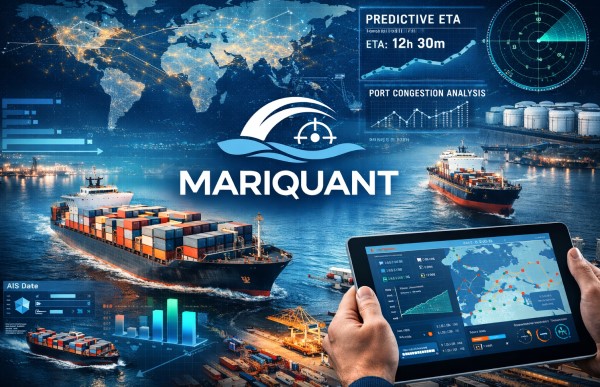
Mariquant: Transforming Maritime Intelligence Through Data-Driven Innovation

The global maritime industry is the backbone of international trade, yet it remains one of the most complex and data-heavy sectors in the world. From unpredictable port congestion to fluctuating voyage times and volatile commodity flows, decision-makers face constant uncertainty. Mariquant emerged as a specialised maritime analytics company with a clear purpose: to turn vast amounts of shipping data into actionable intelligence that supports smarter, faster and more confident decisions.
This article explores Mariquant, its role in maritime analytics, the problems it aims to solve, and why data-driven platforms like Mariquant are increasingly vital to the future of shipping.
Understanding Mariquant and Its Core Vision
Mariquant is a maritime analytics and intelligence company focused on applying advanced data science techniques to shipping and logistics. At its core, the company was built around a simple but powerful idea: shipping decisions should be guided by evidence, not assumptions.
The maritime sector generates enormous volumes of data every day, including vessel movements, port activity, cargo flows and voyage performance. Historically, much of this information was underused or interpreted manually. Mariquant’s vision was to bridge this gap by combining machine learning, predictive analytics and maritime expertise into practical tools that deliver clarity in a complex industry.
The Challenges Facing the Maritime Industry
Operational Uncertainty
Shipping operations are affected by weather conditions, port congestion, mechanical issues and regulatory delays. Even small disruptions can lead to significant financial losses. Traditional planning methods often struggle to account for these dynamic variables.
Limited Predictive Capability
While historical data has long been available, predicting future outcomes such as estimated time of arrival or port waiting times remained unreliable for many operators. This lack of foresight makes it difficult to optimise routes, manage fleets or plan cargo movements efficiently.
Data Overload Without Insight
The industry does not suffer from a lack of data; instead, it struggles with extracting meaningful insight. Raw datasets such as AIS vessel tracking are vast and complex, requiring advanced analytical models to become useful.
Mariquant positioned itself as a solution to these long-standing challenges.
How Mariquant Uses Data to Create Value
Advanced Maritime Analytics
Mariquant specialises in analysing large maritime datasets and transforming them into structured intelligence. This includes vessel movement analysis, port performance metrics and trade flow modelling.
By applying statistical models and machine learning techniques, Mariquant aims to uncover patterns that are not visible through traditional analysis.
Predictive Models for Shipping Decisions
One of the most valuable contributions of Mariquant is its focus on prediction rather than description. Instead of simply explaining what has already happened, its models are designed to anticipate what is likely to happen next.
Estimated Time of Arrival Forecasting
Accurate ETA forecasting is critical for charterers, operators and ports. Mariquant’s predictive approach considers historical behaviour, vessel characteristics and operational patterns to improve arrival time estimates.
Port Congestion and Turnaround Analysis
Port delays are a major cost driver in shipping. Mariquant’s analytics help estimate congestion levels and expected waiting times, allowing stakeholders to plan voyages and contracts more effectively.
Cargo Flow and Market Intelligence
Tracking Global Trade Movements
Understanding where cargo is moving and in what volume is essential for traders and analysts. Mariquant’s cargo flow models focus on mapping and forecasting trade movements, particularly in tanker and energy markets.
By analysing vessel movements and cargo behaviour, Mariquant helps users gain insight into supply and demand trends across regions.
Supporting Commercial Strategy
Accurate market intelligence allows shipping companies and traders to position assets more effectively, negotiate contracts with greater confidence and respond faster to market changes.
The Role of Machine Learning in Mariquant’s Approach
Why Machine Learning Matters in Shipping
Shipping data is noisy, incomplete and constantly changing. Machine learning models are well suited to this environment because they can adapt as new data becomes available and improve accuracy over time.
Mariquant integrates machine learning to identify trends, detect anomalies and refine predictions without relying solely on fixed assumptions.
From Raw Data to Decision-Ready Insight
The true value of Mariquant’s technology lies not in the algorithms themselves but in how results are presented. Complex outputs are translated into clear, usable insights that support operational and strategic decisions.
This human-centred design approach ensures that analytics enhance expertise rather than replace it.
Who Benefits from Mariquant’s Solutions
Shipowners and Operators
Operators gain better visibility over fleet performance, voyage planning and port delays. This can lead to reduced fuel consumption, lower operational costs and improved schedule reliability.
Charterers and Traders
For commercial stakeholders, predictive intelligence supports contract negotiations, risk management and market positioning. Knowing where vessels are likely to be and when cargo will arrive provides a competitive advantage.
Analysts and Decision-Makers
Market analysts benefit from structured, reliable data that supports deeper insight into trade flows and industry trends. This enables more accurate forecasting and reporting.
Mariquant and the Digital Transformation of Shipping
A Traditionally Conservative Industry
Shipping has historically been slow to adopt digital solutions, often due to fragmentation and complex stakeholder relationships. Companies like Mariquant represent a shift towards modern, technology-driven decision-making.
Data as a Strategic Asset
Mariquant highlights a growing recognition within the maritime sector that data is not just an operational by-product but a strategic asset. When analysed effectively, it can unlock efficiency, transparency and resilience.
Challenges and Limitations
Scaling in a Competitive Market
Maritime analytics is a competitive and rapidly evolving field. Smaller specialist companies face challenges in scaling solutions, integrating with legacy systems and gaining widespread adoption.
Data Quality and Availability
Even the most advanced models depend on data quality. Inconsistencies, missing information and reporting delays remain ongoing challenges across the industry.
Mariquant’s approach demonstrates that while technology can mitigate these issues, close collaboration with industry stakeholders remains essential.
The Broader Impact of Companies Like Mariquant
Improved Efficiency and Sustainability
More accurate predictions lead to better route planning and reduced idle time at ports. This not only cuts costs but also supports environmental goals by lowering fuel consumption and emissions.
Better Risk Management
Predictive analytics help stakeholders anticipate disruptions rather than simply react to them. This proactive approach strengthens resilience across supply chains.
The Future of Maritime Analytics
The demand for maritime intelligence is only set to grow as global trade becomes more interconnected and regulations more complex. Data-driven platforms will play an increasingly central role in how shipping companies operate and compete.
Mariquant represents an important chapter in this evolution, demonstrating how focused analytics and machine learning can deliver tangible value in a challenging industry.
Conclusion: Why Mariquant Matters
Mariquant stands as an example of how specialised analytics can transform one of the world’s most essential industries. By turning complex maritime data into practical intelligence, it supports smarter decisions, reduces uncertainty and enhances operational efficiency.
While the maritime sector continues to evolve, the principles behind Mariquant’s approach remain highly relevant. Data, when combined with expertise and advanced analytics, has the power to reshape shipping for the better. In an industry where timing, accuracy and foresight are everything, solutions inspired by Mariquant’s vision will continue to shape the future of maritime decision-making.